Introduction
Cryptocurrency offers individuals the ability to control and manage their assets independently, without relying on banks or traditional financial institutions. While this autonomy is empowering, it comes with the responsibility of safeguarding private keys. Misplacing or exposing these keys can result in permanent loss of cryptocurrency.
Ledger provides a trusted solution for securing digital assets through hardware wallets. Ledger.com/start serves as the official starting point for beginners, offering step-by-step guidance to initialize their hardware wallet, connect to Ledger Live, manage multiple accounts, and implement strong security practices. This guide explores Ledger.com/start comprehensively, ensuring that new users can confidently begin their cryptocurrency journey.
What is Ledger.com/start?
Ledger.com/start is the official entry point for new Ledger users. It guides individuals through the initial setup of a Ledger hardware wallet and provides instructions for connecting to the Ledger Live application. The platform is designed to be intuitive, offering support for both beginners and more experienced users.
Using Ledger.com/start, users can:
Initialize a Ledger hardware wallet
Set up a new wallet or restore an existing one
Install and connect Ledger Live
Add and manage cryptocurrency accounts
Conduct secure transactions
Learn security best practices for safeguarding assets
The resource provides step-by-step instructions to ensure users can start securely and confidently.
Step 1: Choosing and Purchasing a Ledger Hardware Wallet
Before starting, you need a Ledger hardware wallet. Ledger offers several models, such as the Ledger Nano S and Ledger Nano X. These devices store private keys offline, protecting them from online threats like hacking or malware.
Considerations when choosing a device:
Ledger Nano S: Affordable and compact, ideal for basic cryptocurrency management.
Ledger Nano X: Features Bluetooth connectivity, supports more cryptocurrency apps simultaneously, and is mobile-friendly.
It is essential to purchase Ledger devices directly from authorized sources to avoid counterfeit or tampered products.
Step 2: Unboxing and Initializing Your Device
Once you have a Ledger hardware wallet, the next step is to initialize it. Ledger.com/start provides clear guidance on this process:
Unbox Your Device: Ensure the packaging is sealed and includes the hardware wallet, USB cable, and recovery card.
Connect the Device: Use USB or Bluetooth (for Ledger Nano X) to connect the device to a computer or mobile device.
Set a PIN: Choose a secure PIN to prevent unauthorized access.
Write Down Your Recovery Phrase: Ledger generates a 24-word recovery phrase. Record it offline and store it securely.
Verify Your Recovery Phrase: Confirm the phrase on the device to ensure it was recorded accurately.
This process ensures that your wallet is securely initialized and ready for cryptocurrency management.
Step 3: Installing and Setting Up Ledger Live
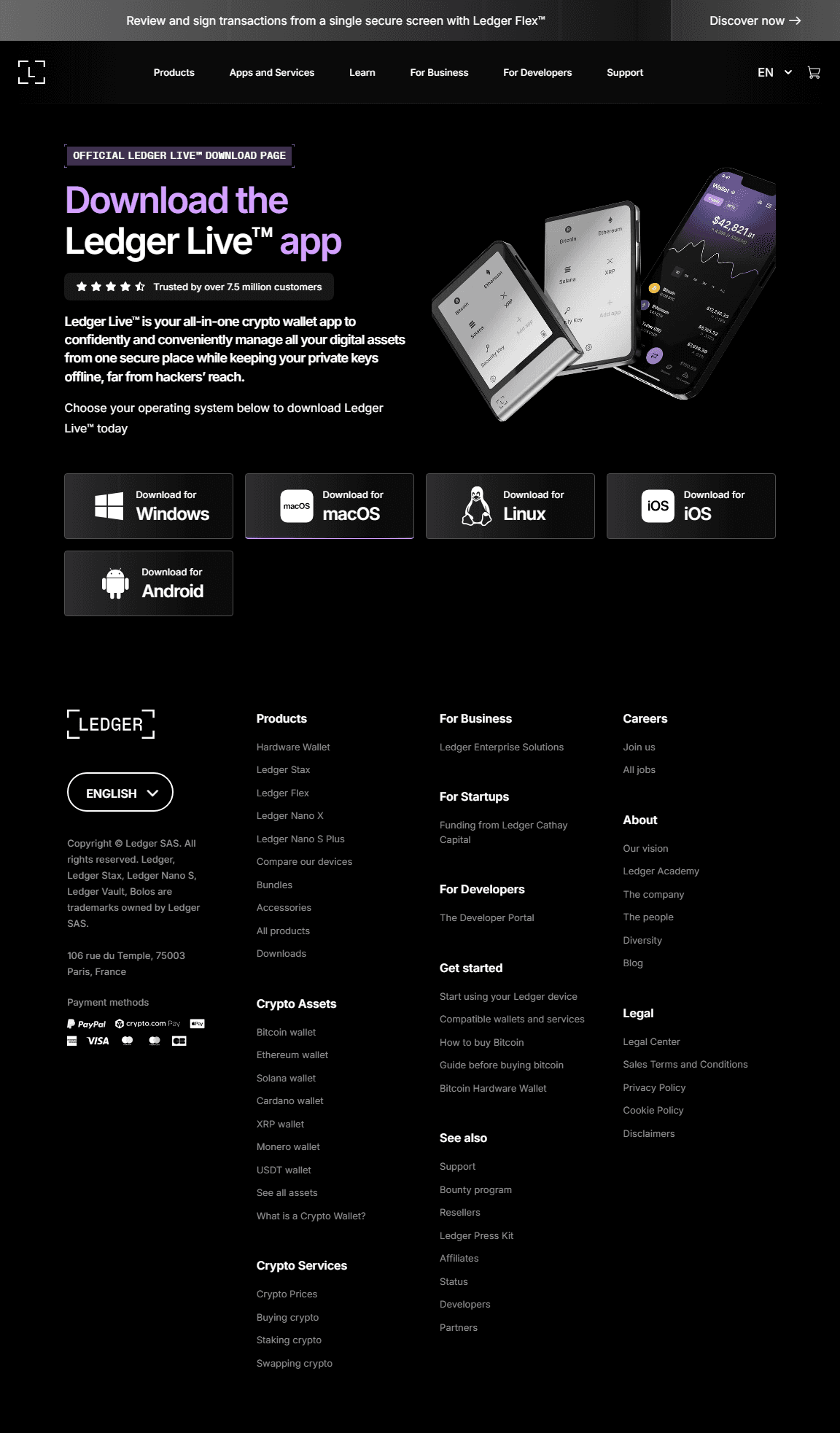
Ledger Live is the application used to manage accounts and perform transactions. Ledger.com/start provides guidance for downloading and installing Ledger Live on a trusted computer or mobile device.
Steps to install Ledger Live:
Download Ledger Live for your operating system.
Install the application following the prompts.
Open Ledger Live and connect your hardware wallet.
Choose to create a new wallet or restore an existing wallet using your recovery phrase.
Ledger Live serves as the central hub for monitoring balances, managing accounts, sending and receiving cryptocurrency, and updating your Ledger device.
Step 4: Adding Accounts and Managing Cryptocurrencies
Once Ledger Live is set up, you can add cryptocurrency accounts to your wallet. Ledger.com/start guides users on selecting the cryptocurrencies they want to manage and installing the corresponding apps on their device.
Adding accounts in Ledger Live:
Open the “Accounts” section in Ledger Live.
Choose the cryptocurrency type and follow the instructions to add the account.
Repeat the process to add multiple accounts for different digital assets.
With accounts set up, you can monitor balances, track transaction history, and gain a comprehensive view of your cryptocurrency portfolio.
Step 5: Sending and Receiving Cryptocurrency
Ledger Live, accessed through Ledger.com/start, allows secure cryptocurrency transactions.
Sending Cryptocurrency:
Select the account to send funds from.
Enter the recipient address and amount.
Confirm the transaction on your Ledger device.
Receiving Cryptocurrency:
Select the account to receive funds.
Generate a receiving address in Ledger Live.
Verify the address on your Ledger device before sharing it.
Physical confirmation on the Ledger device ensures that private keys never leave the hardware wallet, protecting your assets from unauthorized transfers.
Security Best Practices
Ledger.com/start emphasizes security as a critical component of cryptocurrency management. Best practices include:
Keep Your Recovery Phrase Offline: Never store it digitally or share it with anyone.
Use Trusted Devices: Access Ledger Live only from secure computers or mobile devices.
Verify Addresses: Always confirm receiving addresses on the Ledger device.
Update Firmware Regularly: Ensure your device has the latest security enhancements.
Use Optional Passphrases: Add a passphrase for extra protection, especially for high-value accounts.
Following these practices reduces the risk of loss or theft and ensures secure management of your assets.
Troubleshooting Common Issues
Even with proper setup, users may encounter occasional problems. Ledger.com/start provides solutions for common issues:
Device Not Recognized: Check the USB or Bluetooth connection and confirm Ledger Live is updated.
Login Failures: Restart Ledger Live and reconnect the hardware wallet.
Forgotten PIN: Restore wallet access using the 24-word recovery phrase.
Transaction Errors: Verify network settings and confirm addresses on the device.
These steps allow users to troubleshoot without compromising security.
Advanced Features and Tips
Once you are comfortable with basic setup and transactions, Ledger.com/start encourages exploring advanced features:
Portfolio Tracking: Ledger Live allows you to monitor multiple accounts and view the total value of your cryptocurrency holdings.
Device Updates: Keep your hardware wallet firmware updated for optimal performance and security.
Custom Passphrases: Enhance security for sensitive accounts by adding passphrases unique to each wallet.
Multiple Account Management: Ledger Live supports managing several accounts simultaneously, allowing users to organize different cryptocurrencies efficiently.
These features provide greater control and flexibility for users managing diverse digital assets.
Conclusion
Ledger.com/start is the essential starting point for anyone new to cryptocurrency. By following the step-by-step guidance, users can securely set up a Ledger hardware wallet, install Ledger Live, add accounts, perform transactions, and implement best security practices.
Ledger’s approach ensures that private keys remain offline while providing an intuitive interface for managing assets. Combining hardware-based authentication, recovery phrases, PIN protection, and optional passphrases, Ledger.com/start empowers users to take full control of their digital assets safely and confidently.
Whether you are a beginner or an experienced user, Ledger.com/start offers all the tools and guidance needed to securely navigate the cryptocurrency world, giving you peace of mind while managing and growing your portfolio.